..image:: picture.jpeg
:height: 100px
:width: 200 px
:scale: 50 %
:alt: alternate text
:align: right
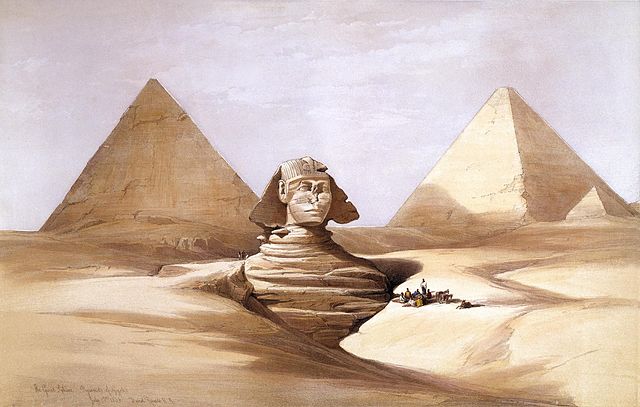
..image:: images/the_great_sphinx_david_roberts.jpg
:width: 350
:alt: The Great Sphinx and Pyramids of Gizeh (Giza) by David Roberts
:align: center
A substitution
is an element definition that lets you reuse that element. Some of
the parameters apply to the substitution as to the inline directives.
..|substitution-name|image:: path/filename.png
..|David Roberts: The Great Sphinx|image:: images/the_great_sphinx_david_roberts.jpg
:alt: The Great Sphinx and Pyramids of Gizeh (Giza) by David Roberts
:width: 200
Below is the famous The Great Sphinx and Pyramids of Gizeh (Giza),
17 July 1839, by David Roberts (Public domain Wikimedia Commons).

|David Roberts: The Great Sphinx|
Below is the famous The Great Sphinx and Pyramids of Gizeh (Giza),
17 July 1839, by David Roberts (Public domain Wikimedia Commons).
..figure:: path/filename.png
..figure:: images/the_great_sphinx_david_roberts.jpg
:alt: The Great Sphinx and Pyramids of Gizeh (Giza) by David Roberts
:width: 300
:align: center
The Great Sphinx and Pyramids of Gizeh (Giza) by David Roberts
Public domain from https://commons.wikimedia.org/
We can configure Sphinx to *auto-build* the output when it detects
a change, or we can initiate a manual build.

The command to generate output is ``make <output>``. Sphinx can convert RST
to various formats. You can run the ``make command`` without any args to
view the possible output types.