
visualkeras: Vector Index DB#
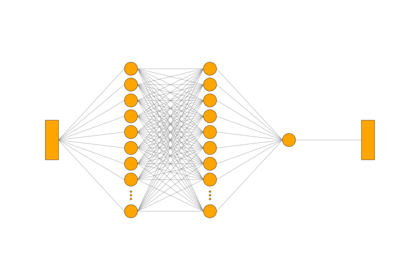
An example showing the visualkeras function
used by a tf.keras.Model model.
# Authors: The scikit-plots developers
# SPDX-License-Identifier: BSD-3-Clause
# visualkeras Need aggdraw tensorflow
# !pip install scikitplot[core, cpu]
# or
# !pip install aggdraw
# !pip install tensorflow
# python -c "import tensorflow as tf, google.protobuf as pb; print('tf', tf.__version__); print('protobuf', pb.__version__)"
# python -m pip check
# If Needed
# pip install -U "protobuf<6"
# pip install protobuf==5.29.4
import tensorflow as tf

# Clear any session to reset the state of TensorFlow/Keras
tf.keras.backend.clear_session()

from scikitplot import visualkeras
import sys

# TODO: change this import to wherever your modified AnnoyIndex lives
# e.g. scikitplot.cexternals._annoy or similar
import scikitplot.cexternals._annoy as annoy
# from scikitplot import annoy

sys.modules["annoy"] = annoy  # now `import annoy` will resolve to your module

import annoy

print(annoy.__doc__)
High-level Python interface for the C++ ANNoy backend.

Spotify ANNoy [1]_ (Approximate Nearest Neighbors Oh Yeah).

Exports:

* Annoy       → low-level C-extension type (stable) `c-api powered new features <https://scikit-plots.github.io/dev/modules/generated/scikitplot.cexternals._annoy.Annoy.html>`_
* AnnoyIndex  → alias of Annoy (legacy AnnoyIndex name)

.. seealso::
    * :ref:`ANNoy <annoy-index>`
    * :ref:`cexternals/ANNoy <cexternals-annoy-index>`
    * https://github.com/spotify/annoy
    * https://pypi.org/project/annoy

References
----------
.. [1] `Spotify AB. (2013). "Approximate Nearest Neighbors Oh Yeah"
   Github. https://github.com/spotify/annoy <https://github.com/spotify/annoy>`_

Examples
--------
>>> import random; random.seed(0)
>>> # from annoy import Annoy, AnnoyIndex
>>> from scikitplot.cexternals._annoy import Annoy, AnnoyIndex
>>> from scikitplot.annoy import Annoy, AnnoyIndex, Index

>>> f = 40  # vector dimensionality
>>> t = AnnoyIndex(f, "angular")  # Length of item vector and metric
>>> t.add_item(0, [1] * f)
>>> t.build(10)  # Build 10 trees
>>> t.get_nns_by_item(0, 1)  # Find nearest neighbor
Total running time of the script: (0 minutes 0.589 seconds)
Related examples
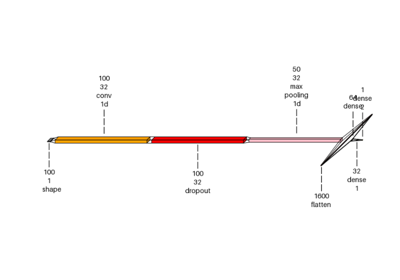
Visualkeras: Spam Classification Conv1D Dense Example
Visualkeras: Spam Classification Conv1D Dense Example